Elevating Visual Communication with the Google Slides Template - Cognition
In an era defined by information saturation, the ability to communicate complex ideas with clarity and aesthetic precision is no longer a luxury; it is a fundamental business imperative. Professionals across industries are increasingly recognizing that presentation design is not merely about decoration but about cognitive processing and narrative structure. This shift in perspective has driven demand for tools that bridge the gap between high-level strategy and visual execution. The Google Slides Template - Cognition emerges as a direct response to this evolving landscape, offering a sophisticated framework designed specifically for those who need to articulate intelligence, innovation, and professionalism without getting bogged down in technical design hurdles.
The Intersection of Design and Cognitive Clarity
To understand the relevance of this template, one must first understand the current state of digital communication. We have moved past the age of text-heavy bullet points and generic stock photography. Modern audiences, whether they are venture capitalists, potential clients, or internal stakeholders, possess a refined visual literacy. They expect presentations to function as intuitive interfaces that guide them through a logical argument. The Google Slides Template - Cognition is engineered with this expectation in mind. It is not simply a collection of slides; it is a visual system that prioritizes information hierarchy and readability.
This template fits squarely into the broader trend of "functional aesthetics" in business technology. As remote work and digital-first collaboration become permanent fixtures in the corporate ecosystem, the presentation deck has replaced the physical handout and the whiteboard session. Consequently, the tools used to create these decks must offer the flexibility of cloud-based collaboration without sacrificing the polish traditionally associated with desktop publishing software. By leveraging the accessibility of Google Slides while providing the structural rigor of professional design, this template addresses the hybrid workflow that defines modern productivity.
Versatility Across Professional Verticals
One of the most significant challenges in selecting a presentation asset is ensuring it does not pigeonhole the user into a specific niche. The market is saturated with templates that are too playful for finance or too sterile for creative agencies. The Google Slides Template - Cognition distinguishes itself through radical adaptability. Its design language is neutral yet authoritative, making it an ideal vessel for diverse content types.
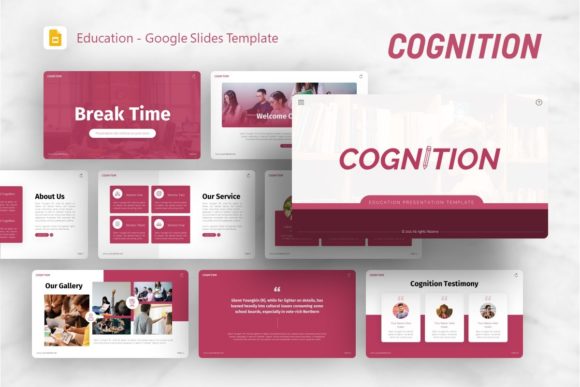
- Creative Agencies and Portfolios: For creatives, the challenge is often showcasing work without the template competing with the portfolio pieces. This template utilizes clean negative space and pixel-perfect picture placeholders that allow photography and design work to take center stage while maintaining a cohesive gallery structure.
- Startups and Pitch Decks: Entrepreneurs require a narrative flow that builds confidence. The included handcrafted infographics serve as critical tools for visualizing market size, traction, and business models. These are not generic charts; they are designed to make data digestible and persuasive, directly supporting the fundraising narrative.
- Corporate and Business Profiles: Established enterprises need consistency. Because the template is based on Master Slides, global changes to branding, color palettes, or typography can be applied instantly across all 36 slides. This ensures brand compliance and reduces the friction of updating quarterly reports or internal training materials.
- Education and Knowledge Sharing: As suggested by its name, Cognition is optimized for learning. The layout structures support pedagogical flows, making it suitable for workshops, webinars, and educational introductions where retention is the primary metric of success.
Addressing Evolving Workflow Expectations
The preference for this specific template also signals a change in how professionals value their time. There is a growing resistance to the "blank canvas paralysis" that plagues many presenters. Users no longer want to spend hours aligning text boxes or searching for matching icons. They demand assets that are easy customizable and ready for immediate deployment. The inclusion of vector icons and resizable graphics within the Google Slides Template - Cognition acknowledges that speed and quality are no longer mutually exclusive.
Furthermore, the technical specifications reflect a mature understanding of user needs. The provision of a PowerPoint .PPTX file alongside the Google Slides version demonstrates an awareness of cross-platform realities. While many teams have migrated to the cloud, legacy systems and offline requirements persist in many organizations. Providing both formats ensures that the asset remains useful regardless of the recipient's software environment. Additionally, the inclusion of a documentation file transforms the product from a simple download into a supported resource, reducing the learning curve and empowering users to maximize the utility of the master slide architecture.
The Strategic Value of Handcrafted Infographics
In the context of data-driven decision-making, the quality of visualization matters immensely. Generic chart builders often produce visuals that lack context or emphasis. The handcrafted infographics included in this template represent a significant value proposition. They are pre-designed to highlight relationships, processes, and statistics in a way that standard software automation cannot replicate. For a marketer analyzing consumer trends or a project manager outlining a roadmap, these graphics serve as cognitive shortcuts, allowing the audience to grasp complex concepts rapidly. This aligns with the broader industry movement toward data storytelling, where the goal is not just to display numbers, but to evoke understanding and action.
Why Attention is Shifting Toward Structured Templates
Professionals are paying attention to resources like the Google Slides Template - Cognition because the cost of poor communication has increased. In a competitive market, a subpar presentation can undermine a solid business case or devalue a creative portfolio. Conversely, a polished, well-structured deck signals competence and attention to detail. This template acts as an insurance policy against design failure. It provides a guardrail that keeps amateur designers within the bounds of professional aesthetics while still allowing for personalization.
Moreover, the rise of AI and automated content generation has paradoxically increased the value of human-curated design structure. As text becomes easier to generate, the differentiation lies in how that text is presented and contextualized. A template that offers strong skeletal structures—like the 36 unique slides found here—allows creators to focus their energy on refining the message rather than fighting with formatting. It represents a return to intentionality in design, where every element serves a communicative purpose.
Practical Application and Implementation
For those considering integrating this template into their workflow, it is important to approach it as a system rather than a static set of backgrounds. The true power lies in the Master Slides. Users should invest time upfront to customize the master theme with their specific brand assets. Once this foundation is laid, the creation of new decks becomes an exercise in assembly rather than creation. The drag-and-drop picture placeholders further streamline this process, particularly for portfolios and case studies where visual evidence is paramount.
It is also worth noting the importance of the disclaimer regarding preview images. Understanding that demo images are for preview purposes only manages expectations and encourages users to source high-quality, relevant imagery for their own content. This distinction reinforces the template’s role as a container for original thought rather than a pre-packaged message. The user retains full ownership of the narrative; the template simply ensures that the narrative is delivered with maximum impact.
Future-Proofing Your Presentation Assets
As we look toward the future of digital communication, the criteria for effective presentation tools will continue to evolve. However, the core principles embodied by the Google Slides Template - Cognition—clarity, adaptability, and structural integrity—are timeless. Trends in color and typography may shift, but the need to organize information logically and present it beautifully is a constant in human commerce and education.
By adopting tools that prioritize these fundamentals, professionals insulate themselves from the churn of fleeting design fads. They build a library of assets that can grow with their organization or personal brand. Whether you are a freelancer pitching your first major client, a startup founder seeking seed funding, or an educator introducing a complex new curriculum, the infrastructure provided by this template supports the ultimate goal: transferring knowledge effectively and memorably.
Ultimately, the choice of a presentation template is a strategic decision about how you wish to be perceived. In choosing a resource that balances creative freedom with disciplined structure, you signal to your audience that you respect both their time and their intelligence. The Google Slides Template - Cognition offers precisely this balance, serving as a reliable partner in the ongoing effort to communicate better in a noisy world. It is more than a file; it is a facilitator of connection, understanding, and professional excellence.