Evaluating the Manufacturing Process Minimal Vector Asset for Professional Design
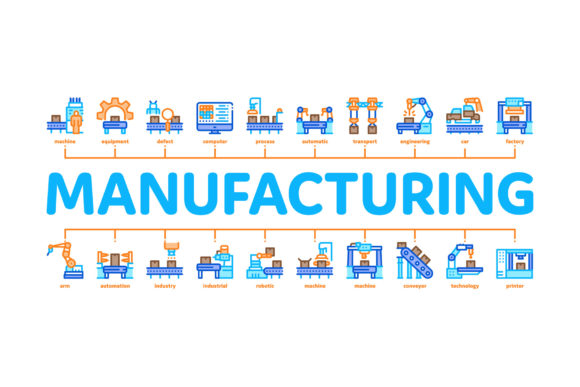
In the landscape of industrial and technical content creation, finding visual assets that balance aesthetic appeal with functional clarity is a persistent challenge. The Manufacturing Process Minimal vector collection addresses this specific niche by offering a streamlined, infographic-ready representation of modern production environments. Rather than relying on photorealistic imagery that can quickly date a project or clash with existing brand guidelines, this asset suite utilizes clean lines and simplified forms to communicate complex operational concepts. For professionals ranging from marketing directors to educational content creators, understanding the practical utility of this specific vector set is essential before integrating it into workflows involving web banners, technical documentation, or corporate presentations.
Visual Composition and Technical Specifications
The core value of the Manufacturing Process Minimal package lies in its deliberate reduction of visual noise. The illustration set typically includes three distinct but thematically linked components: a manufacturing conveyor system transporting cars and products, a factory computer interface displaying settings, and an articulated robot arm. This triad covers the essential pillars of Industry 4.0: logistics, digital control, and automated execution. By isolating these elements, designers can use them individually as spot illustrations or combine them to create comprehensive process flow diagrams without the visual clutter often associated with stock photography.
From a technical standpoint, the availability of both EPS and JPG formats ensures cross-platform compatibility. The EPS (Encapsulated PostScript) file is the primary working asset for professional designers. It allows for infinite scaling without pixelation, which is critical when adapting a single source file for disparate outputs like a large-format trade show banner and a small mobile app icon. More importantly, the vector format permits granular editing. Users can modify stroke weights, adjust color palettes to match strict corporate identity standards, or rearrange component positioning within Adobe Illustrator or CorelDRAW. The included JPG serves as a high-resolution preview or a quick-drop solution for non-designers working in platforms like PowerPoint or WordPress who may not have access to vector editing software but still require crisp visuals for immediate use.
Practical Applications in Digital and Print Media
The designation of this asset as a "web banner vector" suggests a specific aspect ratio and compositional balance optimized for horizontal digital real estate. In practice, the Manufacturing Process Minimal layout provides ample negative space, which is a crucial consideration for UI/UX designers and web developers. Unlike busy photographic backgrounds that require heavy overlaying to make text legible, this minimal illustration allows headlines and call-to-action buttons to coexist harmoniously with the graphic elements. The simplified geometry guides the viewer’s eye across the banner rather than trapping attention in a single detailed focal point, thereby supporting higher engagement rates on landing pages dedicated to SaaS platforms, logistics services, or engineering consultancies.
Beyond web headers, the modularity of the robot arm and computer settings illustrations makes them highly effective for technical documentation and internal training materials. When explaining standard operating procedures or software interfaces, abstract representations often outperform screenshots because they focus attention on the concept rather than specific UI versions that may change with updates. Educators and corporate trainers can leverage these vectors to create timeless learning resources. The car and product conveyor element, specifically, serves as an excellent metaphor for workflow optimization, supply chain management, or lean manufacturing principles, making it versatile for business coaching and entrepreneurial content.
Assessing Quality and Stylistic Consistency
When evaluating vector assets for long-term use, consistency is as important as individual quality. The Manufacturing Process Minimal set maintains a unified line weight and corner radius across all three illustrations. This stylistic coherence is vital for building a recognizable visual language. If a designer uses the robot arm on one page and the conveyor belt on another, the audience intuitively understands they are part of the same narrative ecosystem. Many stock vector packs fail this test by mixing styles from different artists or eras, resulting in a disjointed user experience. This asset’s adherence to a singular minimalist aesthetic reduces the post-production time required to harmonize disparate elements.
However, potential users should assess whether the level of abstraction matches their audience's expectations. While minimalism excels at conveying high-level concepts and modern tech aesthetics, it lacks the tactile detail necessary for certain applications. For instance, if the goal is to showcase the specific texture of a new automotive coating or the precise ergonomics of a robotic gripper, this stylized approach will be insufficient. It is a communicative tool for processes and systems, not a product catalog substitute. Professionals must distinguish between illustrating the idea of manufacturing versus documenting specific hardware specifications.
Workflow Integration and Customization Potential
For freelancers and agency designers working under tight deadlines, the structural integrity of the Manufacturing Process Minimal vectors significantly impacts efficiency. Well-constructed vector files feature organized layers, grouped elements, and expanded strokes. Assuming this asset follows industry best practices, it allows for rapid customization. A designer can easily swap the generic "car" silhouette for a client-specific product shape or alter the data visualization on the factory computer screen to reflect actual KPIs. This adaptability transforms a generic stock asset into a bespoke brand element.
The inclusion of factory computer settings specifically adds a layer of relevance for software companies targeting the manufacturing sector. As digital twins and IoT dashboards become central to industrial operations, visuals representing the intersection of physical machinery and digital interfaces are in high demand. This illustration bridges that gap effectively. Marketers promoting ERP systems, MES platforms, or predictive maintenance AI can use this visual shorthand to instantly signal relevance to technical buyers without resorting to clichéd matrix-style graphics or overly futuristic sci-fi tropes that undermine credibility.
Audience Fit and Strategic Considerations
Determining whether Manufacturing Process Minimal is the right investment requires an honest assessment of project goals and audience demographics. The asset is ideally suited for B2B communication where clarity, professionalism, and scalability are paramount. Small business owners in the prototyping or fabrication space will find it useful for creating pitch decks that look polished without the expense of custom illustration. Bloggers and publishers covering industrial trends can use it to break up dense text and improve SEO through relevant alt-text and image engagement metrics. Conversely, luxury consumer brands or heritage manufacturers emphasizing craftsmanship and human touch may find the sterile, automated aesthetic misaligned with their brand story.
- Best For: Tech startups, logistics firms, educational institutions, SaaS marketers, and corporate communications teams requiring scalable, editable process diagrams.
- Less Suitable For: Consumer-facing artisanal brands, detailed technical manuals requiring photorealism, or projects needing vintage/retro industrial aesthetics.
- Key Advantage: Timelessness; minimal designs avoid trend cycles better than skeuomorphic or hyper-realistic 3D renders.
- Technical Note: Always verify layer organization in the EPS file before purchase if extensive recoloring or element isolation is planned.
Long-Term Value and Licensing Awareness
Investing in vector assets like Manufacturing Process Minimal should be viewed through the lens of reusable utility rather than single-use consumption. Because the design avoids dating itself with trendy gradients or specific device models, it retains relevance over years of use. A web banner created today can be repurposed for an annual report next year or adapted for a social media campaign the following quarter simply by adjusting the crop and color values. This longevity improves the return on investment compared to photographic assets that may require reshooting or relicensing as fashions and technologies evolve.
Professionals must also remain vigilant regarding licensing terms. While the file formats (JPG, EPS) dictate technical usage, the license dictates legal usage. Ensure the selected license covers intended commercial applications, especially for web banners and digital advertising. Some standard licenses restrict impressions or require extended licensing for template resale. Furthermore, while the minimal style is generic enough to avoid trademark issues, users modifying the factory computer or car elements should ensure they do not inadvertently replicate proprietary product designs or protected UI layouts during customization. Responsible use involves balancing creative adaptation with intellectual property respect.
Ultimately, the Manufacturing Process Minimal vector set represents a pragmatic solution for modern visual communication. It strips away the superfluous to focus on the functional relationships between automation, data, and production. For the discerning professional, its worth is measured not just in its immediate visual appeal, but in its capacity to serve as a flexible, reliable foundation for diverse creative projects. By prioritizing clarity and editability, it supports a workflow that values substance over spectacle, aligning perfectly with the needs of businesses and creators who understand that in industrial design, form must always follow function.