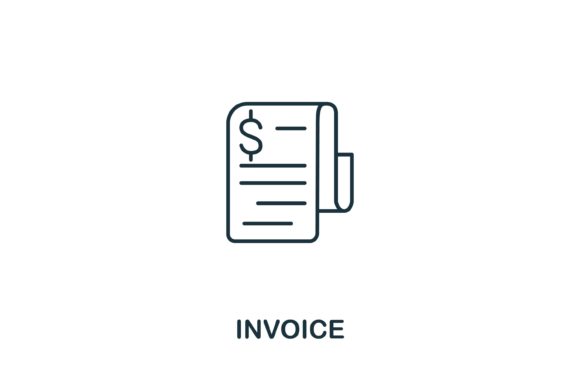
Invoice Icon: Line Style Vector for UX and Branding
In the complex ecosystem of digital product design and financial branding, clarity is often more valuable than decoration. The invoice icon serves as a critical functional signifier within user interfaces, e-commerce platforms, and business documentation. When selected correctly, this specific line style symbol from a shopping icon collection does more than represent a bill; it establishes visual hierarchy, guides user navigation, and reinforces brand consistency across multiple touchpoints. For designers, developers, and business owners, understanding the utility and technical specifications of this vector graphic element is essential for creating seamless user experiences and professional marketing materials.
The Role of Line Style Symbols in Financial UX
User experience design relies heavily on cognitive recognition. Users process visual symbols significantly faster than text labels, making the invoice icon a cornerstone of efficient navigation in fintech applications, accounting software, and online marketplaces. A line style symbol offers distinct advantages over filled or solid variants in modern interface design. The open geometry of line icons reduces visual weight, preventing clutter in dense dashboards where multiple data points compete for attention. This negative space allows the icon to breathe, ensuring it remains legible even when scaled down to 16x16 pixels for mobile toolbars or breadcrumb navigation.
When integrating an invoice creative element for logo or UI work, consistency in stroke width is paramount. Professional vector graphics maintain uniform line thickness that aligns with other symbols in your existing design system. If your shopping icon collection uses a 2px stroke, your invoice symbol must match precisely to avoid subconscious friction. Mismatched weights can make an interface feel disjointed or unprofessional. The line style approach also supports better accessibility; high-contrast outlines against light or dark backgrounds typically meet WCAG standards more reliably than intricate, detailed illustrations that may lose definition at smaller sizes.
Enhancing Infographics and Business Communication
Beyond pure interface utility, the invoice icon functions as a powerful narrative device in infographics and corporate presentations. When explaining billing cycles, payment workflows, or revenue streams to stakeholders, visual anchors help break up dense textual information. A clean vector symbol acts as a bullet point with semantic meaning, directing the viewer’s eye through complex processes. For educators and content creators producing tutorials on bookkeeping or e-commerce management, these icons provide immediate context without requiring lengthy explanations.
The versatility of this symbol extends to print media as well. In annual reports, pitch decks, or physical invoices themselves, the icon reinforces brand identity. Because it is derived from a cohesive shopping icon collection, it shares a visual DNA with cart, wallet, and tag symbols. This familial relationship between icons creates a unified language that strengthens brand recall. Whether used as a watermark on official documents or as a header element in email newsletters, the consistent application of this creative element signals organizational maturity and attention to detail.
Technical Advantages of EPS and JPG Formats
Acquiring an invoice icon in both EPS and JPG formats addresses the full spectrum of modern design workflows. Understanding when and how to use each file type ensures optimal quality and efficiency across different projects. The inclusion of both formats eliminates the need for time-consuming conversions or redrawing, allowing professionals to move directly from asset acquisition to implementation.
- EPS (Encapsulated PostScript): This is the primary source file for any serious design work. As a vector format, EPS stores mathematical paths rather than pixels. This means you can scale the invoice icon to the size of a billboard or shrink it to a favicon without any loss of resolution or sharpness. It is fully editable in Adobe Illustrator, CorelDRAW, Affinity Designer, and Inkscape. Designers can adjust stroke colors, modify corner radii, or combine the symbol with other shapes to create custom composite logos. For agencies managing multiple client brands, the EPS file allows for rapid recoloring to match specific brand guidelines without maintaining dozens of separate files.
- JPG (Joint Photographic Experts Group): While vectors are superior for design, raster formats remain necessary for quick deployment. The included JPG file serves as an immediate preview asset for non-designers, clients, or team members who lack vector editing software. It is useful for inserting into Word documents, PowerPoint slides, or basic CMS editors where SVG support might be limited. However, users should recognize that JPG is a lossy format best suited for reference or low-stakes presentation use rather than final production assets for web or app development.
Customization and Integration Best Practices
The true value of an easy-to-edit vector graphic lies in its adaptability. When incorporating this invoice icon into a logo or app interface, consider the surrounding visual context. Line icons often benefit from rounded caps and joins, which convey a friendlier, more modern aesthetic suitable for consumer-facing fintech apps. Conversely, square caps and sharp joins project precision and formality, appropriate for enterprise accounting tools or legal invoicing systems. Since the provided EPS file is fully editable, these stylistic adjustments can be made in seconds to better align with your specific brand voice.
For web developers and UI designers, converting the EPS source to SVG code is typically the recommended workflow. This preserves the scalability of the vector while enabling CSS styling and animation. You might animate the "lines" of the invoice drawing themselves upon page load to add delight to a confirmation screen, or change the stroke color on hover to indicate interactivity. Having the original vector source ensures that the exported SVG code is clean and optimized, free from unnecessary anchor points or metadata that can bloat file sizes and impact page performance.
Evaluating Fit for Your Specific Project
While a line style invoice icon is versatile, it is not universally the correct choice for every scenario. Professionals must evaluate their specific needs against the characteristics of this asset. Minimalist line icons excel in modern, clean interfaces but may lack the necessary gravitas for luxury branding or heritage institutions where ornate or illustrative styles are expected. Additionally, if your platform requires multi-colored icons to denote status (e.g., green for paid, red for overdue), a single-color line icon may require additional modification or layering to communicate state effectively.
Consider also the density of your overall icon set. If your shopping icon collection features highly detailed, filled glyphs, introducing a sparse line-style invoice icon could create visual imbalance. Consistency trumps individual beauty in systematic design. Before committing to this asset, place it alongside your existing library at various sizes. Test it in grayscale to ensure it maintains sufficient contrast and recognizability without relying on color cues. This practical validation step prevents costly redesigns later in the development cycle.
For freelancers and small business owners creating their own branding, this icon offers a cost-effective foundation. Rather than commissioning a custom illustration, leveraging a professionally crafted vector symbol allows you to allocate budget toward other critical areas like copywriting or marketing. The key is to customize it sufficiently so it feels proprietary to your brand. Adjusting proportions, adding a unique accent element, or combining it with typography can transform a stock asset into a distinctive brand marker. The ease of editing inherent in the EPS format makes this level of personalization accessible even to those with intermediate design skills.
Streamlining Workflow Across Teams
Efficiency in creative projects often hinges on asset interoperability. When marketers, designers, and developers all have access to appropriate file formats, bottlenecks disappear. The marketer can drop the JPG into a blog post draft immediately, while the designer refines the EPS for the upcoming app release. This parallel processing capability is particularly valuable in agile environments where speed and iteration are constant pressures. By providing both vector and raster options, this invoice icon package supports diverse workflows without requiring specialized conversion tools or technical knowledge from every team member.
Ultimately, the decision to utilize this specific invoice icon should be driven by functional requirements and aesthetic alignment. Its strength lies in its clean line style, comprehensive format inclusion, and editability. When applied thoughtfully within a broader design system, it enhances usability, clarifies communication, and maintains visual coherence. Whether you are building a complex SaaS dashboard, designing a simple freelance invoice template, or creating educational content about commerce, having a reliable, scalable, and adaptable vector symbol saves time and elevates the final output. The goal is never just to add an icon, but to solve a communication problem with precision and grace.