Mastering Visual Storytelling with Creative Portrait Presentation Templates
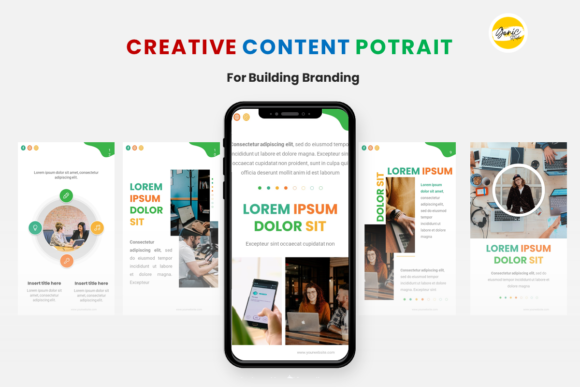
In the fast-paced world of digital communication, the way we present information is just as important as the information itself. Whether you are a business professional pitching a new strategy, an educator explaining complex concepts, or a content creator sharing guidelines on social media, visual appeal dictates engagement. This is where the Creative Content Portrait Presentation Template becomes an essential tool in your digital arsenal. Designed specifically for versatility and ease of use, this 12-slide widesize 16:9 template bridges the gap between professional design and accessible editing, allowing users to create stunning visuals without needing advanced graphic design skills.
Understanding how to leverage portrait-oriented presentations within a widescreen format requires a shift in traditional thinking. While landscape slides have dominated boardrooms for decades, the rise of mobile-first consumption and vertical video platforms has made portrait layouts increasingly relevant. This article explores the significance of creative portrait templates, their practical applications across various sectors, and how to maximize their potential using Microsoft PowerPoint.
The Evolution of Presentation Formats
To truly appreciate the utility of a creative portrait presentation template, one must first understand the changing landscape of visual media. Historically, presentations were confined to projectors and television screens, necessitating a horizontal orientation. However, modern audiences consume content primarily through smartphones and tablets. Even when viewing content on desktop monitors, users often prefer vertical scrolling or split-screen layouts that accommodate portrait imagery.
A widesize 16:9 portrait presentation offers a unique hybrid solution. It maintains the standard aspect ratio required for most modern displays and video players while utilizing the internal canvas to highlight vertical subjects. This format is particularly effective for showcasing human-centric content, such as employee spotlights, influencer profiles, or step-by-step vertical infographics. By adopting this format, presenters signal to their audience that the content is designed for contemporary viewing habits, thereby increasing retention and engagement.
Why Editable PowerPoint Templates Matter
One of the most significant barriers to high-quality visual content is the perceived need for expensive software or specialized training. Many assume that creating professional-grade infographics or creative slides requires mastery of Adobe Illustrator or Photoshop. This assumption is incorrect and often discouraging. The Creative Content Portrait Presentation Template is fully editable with Ms. PowerPoint, democratizing access to professional design.
PowerPoint remains the industry standard for a reason. Its familiarity reduces the learning curve, allowing users to focus on messaging rather than mechanics. When a template is native to PowerPoint, it ensures compatibility across different devices and operating systems. Furthermore, editable templates provide a structured framework that maintains visual consistency—a key principle of branding—while still offering the flexibility to customize colors, images, and text to fit specific needs.
Practical Applications Across Industries
The versatility of this 12-slide template extends far beyond simple aesthetic appeal. Its structure supports a wide range of functional use cases in business, education, and socialization.
Business and Corporate Communication
In the corporate sector, clarity is currency. This template excels in scenarios where data needs to be humanized. For example, HR departments can use portrait slides to introduce new team members, highlighting their photos alongside their roles and expertise. Marketing teams can utilize the layout for product showcases where vertical photography is superior, such as fashion, beverages, or architectural details. Additionally, the template serves as an excellent vehicle for internal guidelines and policy updates, breaking down dense text into digestible, visually engaging segments that employees are more likely to read and remember.
Education and E-Learning
Educators face the constant challenge of maintaining student attention in an era of digital distraction. Traditional bullet-point slides often fail to stimulate cognitive engagement. A creative portrait template allows teachers to present historical figures, literary characters, or scientific diagrams in a format that mimics the social media feeds students interact with daily. This familiarity creates a psychological bridge, making educational content feel more accessible. For online courses and webinars, the 16:9 widesize format ensures the presentation looks crisp on learning management systems, while the portrait elements provide ample space for detailed annotations and side-by-side comparisons.
Socialization and Community Guidelines
Community managers and social organizers often need to disseminate information quickly and attractively. Whether it is announcing event schedules, sharing community rules, or highlighting volunteer achievements, the visual impact of a portrait presentation cannot be overstated. These templates transform dry administrative text into vibrant narratives. Because the slides are designed with creativity in mind, they encourage sharing. A well-designed guideline slide is more likely to be saved and referenced than a plain text document, fostering better compliance and community cohesion.
Maximizing the 12-Slide Structure
A common question among new users is why a template would be limited to 12 slides. In the context of creative content, constraints often breed creativity. Twelve slides represent the ideal narrative arc for micro-presentations and social media carousels. It forces the presenter to distill their message to its essence, eliminating fluff and focusing on value.
- The Hook (Slides 1-2): Use the opening portrait slides to grab attention with bold typography and striking imagery. Clearly state the purpose of the presentation.
- The Core Content (Slides 3-9): This is the meat of the presentation. Utilize the editable infographic elements to break down complex ideas. Alternate between text-heavy and image-heavy slides to maintain visual rhythm.
- The Conclusion and CTA (Slides 10-12): Summarize key takeaways and provide clear next steps. In a digital context, this might include links, QR codes, or contact information formatted vertically for easy scanning.
This structure aligns perfectly with modern attention spans. It is long enough to provide depth but short enough to prevent fatigue. When using the Creative Content Portrait Presentation Template, think of each slide not as a separate entity, but as a panel in a larger visual story.
The Importance of Typography and Free Fonts
Design is not merely about layout; it is also about type. The inclusion of Font Free Download options with this template is a critical feature that addresses both legal and aesthetic concerns. Using unlicensed fonts can lead to copyright issues, especially for commercial businesses. By providing free, licensed fonts, the template ensures that users remain compliant while achieving a cohesive look.
Typography plays a massive role in readability and tone. In portrait presentations, vertical space is at a premium. The included fonts are likely selected for their legibility at various sizes and their ability to stack effectively in narrow columns. Experienced designers know that pairing a bold header font with a clean sans-serif body font creates hierarchy and guides the viewer’s eye. When customizing this template, resist the urge to install too many additional typefaces. Stick to the provided family or limit yourself to two complementary fonts to maintain the professional integrity of the design.
Addressing Common Misconceptions
Despite the clear benefits, some users hesitate to adopt portrait-style templates within a 16:9 framework. Let us clarify a few common misunderstandings.
Misconception 1: Portrait slides look bad on TVs.
Reality: When designed correctly within a 16:9 canvas, portrait elements act as a focal point against a complementary background. This actually enhances visibility on large screens by creating negative space that prevents visual clutter.
Misconception 2: Editing templates limits originality.
Reality: Templates are starting points, not finish lines. They handle the heavy lifting of alignment, color theory, and grid systems, freeing you to inject your unique brand voice and content. Originality comes from the message and the customization, not from reinventing the wheel.
Misconception 3: PowerPoint is outdated for creative design.
Reality: Modern PowerPoint includes advanced features like morph transitions, SVG support, and sophisticated masking tools. Combined with a high-quality template, it is a powerhouse for creative content generation that rivals dedicated design software for speed and efficiency.
Building a Broader Understanding of Visual Communication
Ultimately, downloading and using a Creative Content Portrait Presentation Template is about more than just saving time. It is an exercise in understanding modern visual literacy. As we navigate an increasingly saturated digital environment, the ability to communicate clearly and beautifully is a superpower. This template serves as both a practical tool and an educational resource, teaching users about balance, hierarchy, and audience-centric design.
Whether you are creating guidelines for a new workplace protocol, teaching a history lesson, or building a personal brand, the principles embedded in this 12-slide widesize template will serve you well. By embracing editable, accessible, and aesthetically pleasing formats, we elevate the standard of communication for everyone. We hope you find this resource valuable in your creative journey, empowering you to tell your story with confidence and style.