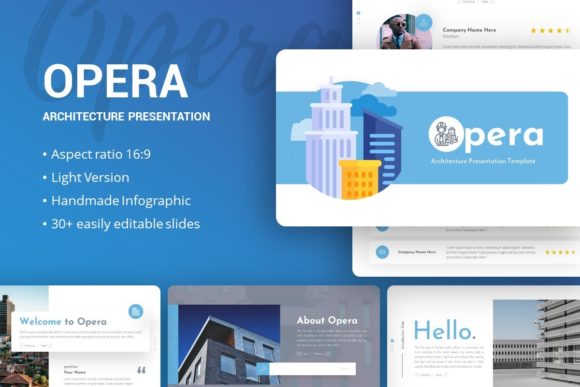
Presentation Template - Opera: A Structural Framework for Modern Visual Storytelling
In the contemporary landscape of digital communication, the architecture of a slide deck often dictates the success of the message itself. Professionals across diverse sectors, from creative agencies to academic researchers, frequently encounter the challenge of translating complex data into compelling visual narratives. The Presentation Template - Opera emerges as a significant solution in this space, offering a pre-structured environment designed to bridge the gap between raw content and polished delivery. Unlike generic slide backgrounds, this template functions as a comprehensive design system that integrates layout logic, typographic hierarchy, and infographic capabilities into a cohesive package. Understanding its structural components and practical applications reveals why it serves as a versatile tool for startups, corporate entities, and individual creators alike.
The Role of Master Slides in Design Consistency
A primary advantage of utilizing a sophisticated framework like the Presentation Template - Opera lies in its reliance on Master Slides. For users unfamiliar with advanced presentation software mechanics, Master Slides act as the foundational blueprint for the entire document. Rather than formatting individual slides one by one—a process prone to inconsistency and error—this template embeds design rules at the root level. This ensures that font choices, color palettes, logo placement, and margin alignments remain uniform across all 35 included slides.
This architectural approach offers tangible benefits for teams and organizations. When multiple stakeholders contribute to a single deck, the Master Slide infrastructure prevents visual fragmentation. A marketing director can add content to a pitch deck while a data analyst populates financial charts, yet the final output retains a singular, professional aesthetic. Furthermore, global changes become instantaneous; updating a brand color or corporate logo in the master view propagates the change throughout the entire presentation, significantly reducing revision time during high-pressure project cycles.
Visualizing Data Through Handcrafted Infographics
Modern audiences possess limited attention spans and high expectations for visual clarity. Text-heavy slides are increasingly ineffective, particularly when conveying statistical information or process flows. The Presentation Template - Opera addresses this by including handcrafted infographics built directly within PowerPoint. These are not static images imported from external design software; they are native vector elements that remain fully editable.
The distinction between native vectors and raster images is critical for long-term usability. Because these graphics are constructed using PowerPoint’s shape tools, users can modify colors to match specific branding guidelines without needing Adobe Illustrator or similar software. Elements can be resized infinitely without pixelation, ensuring crisp projection quality on everything from laptop screens to large-format conference displays. This capability transforms the template from a mere container into an active data visualization tool, allowing educators to simplify complex theories and business owners to highlight key performance indicators with precision.
Sector-Specific Applications and Adaptability
The versatility of this presentation architecture allows it to serve distinct user personas effectively. While the underlying structure remains constant, the application varies significantly based on the user's objective.
Creative Agencies and Portfolios
For designers, photographers, and creative agencies, the visual hierarchy takes precedence over textual density. The template’s picture placeholders utilize drag-and-drop functionality, streamlining the workflow for portfolio updates. Creative professionals can focus on curating their best work rather than wrestling with alignment guides. The clean, modern aesthetic associated with the Opera style provides a neutral backdrop that enhances artistic content without competing with it, ensuring the creator's work remains the focal point.
Startups and Pitch Decks
In the startup ecosystem, clarity and speed are paramount. Investors review hundreds of decks annually, making structural familiarity an asset. The Presentation Template - Opera includes slide layouts specifically optimized for pitching, such as problem-solution pairings, market size visualizations, and team introductions. By providing a proven narrative structure, the template helps founders organize their thoughts logically. The ability to customize contents easily means that entrepreneurs can iterate rapidly based on feedback, swapping out slides or adjusting messaging without rebuilding the design foundation from scratch.
Corporate and Business Reporting
Corporate environments demand professionalism and adherence to brand standards. This template supports company profiles and internal reporting by offering structured layouts for timelines, organizational charts, and quarterly reviews. The pixel-perfect illustrations convey a sense of meticulousness that reflects positively on the organization. For departments lacking dedicated design resources, this template democratizes access to high-quality visual communication, ensuring that internal reports maintain the same polish as external marketing materials.
Technical Specifications and Workflow Efficiency
Beyond aesthetics, the practical utility of the Presentation Template - Opera is defined by its technical specifications and file management. The inclusion of a .PPTX file ensures compatibility with the industry-standard Microsoft PowerPoint ecosystem, minimizing friction when sharing files across different operating systems or software versions. The provision of vector icons further extends customization options, allowing users to replace default imagery with symbols relevant to their specific niche.
Documentation plays a crucial role in user adoption. A well-documented template reduces the learning curve, guiding users through the customization process and explaining how to leverage advanced features like smart guides and placeholder locking. This support material transforms the product from a simple download into an educational resource, helping users improve their general presentation skills. Additionally, the resizable nature of all graphic elements ensures future-proofing; as display aspect ratios evolve or print requirements change, the assets adapt without degradation.
Navigating Licensing and Asset Management
When integrating third-party templates into professional workflows, understanding asset licensing is essential for compliance and expectation management. Users of the Presentation Template - Opera must note that demo images are typically for preview purposes only and are not included in the downloadable files. This distinction is standard industry practice, protecting the intellectual property of stock photographers while giving users the freedom to insert their own licensed or original imagery.
This separation actually benefits the end-user by preventing legal ambiguity. Organizations can confidently use the template for commercial pitches or public publications knowing that no unlicensed stock photography is embedded in the master files. It encourages the creation of authentic content, as users are prompted to source visuals that genuinely represent their brand or message rather than relying on generic placeholders that may appear elsewhere on the web. Proper asset management involves establishing a library of approved images and icons that complement the template’s style, creating a sustainable design ecosystem for future presentations.
Strategic Considerations for Implementation
Adopting a robust template requires a strategic mindset to maximize return on investment. Simply applying the template does not guarantee effective communication; users must still apply principles of good design and storytelling. The Presentation Template - Opera provides the canvas and the brushes, but the artist must still compose the painting. Successful implementation involves auditing existing content against the available slide layouts to identify gaps or redundancies.
Users should also consider the cognitive load of their audience. While the template offers 35 unique slides, effective presentations often utilize fewer, more focused slides. The abundance of options should be viewed as a toolkit rather than a checklist. Selecting the right infographic or layout depends entirely on the data being presented and the narrative goal. For instance, a timeline slide is appropriate for company history but detrimental when explaining a cyclical process. Critical evaluation of each slide’s purpose ensures that the template enhances rather than distracts from the core message.
Furthermore, maintaining version control is vital when using customizable templates in collaborative settings. Establishing a "master" customized version that has been updated with company branding and preferred fonts prevents team members from starting from the raw template repeatedly. This creates a centralized design asset that evolves with the organization, ensuring long-term consistency and efficiency. By treating the Presentation Template - Opera as a living design system rather than a disposable file, professionals can cultivate a distinctive visual identity that resonates with their audience across multiple touchpoints and campaigns.