Visualizing Success: How CRM Strategy Process Flat Vectors Transform Business Communication
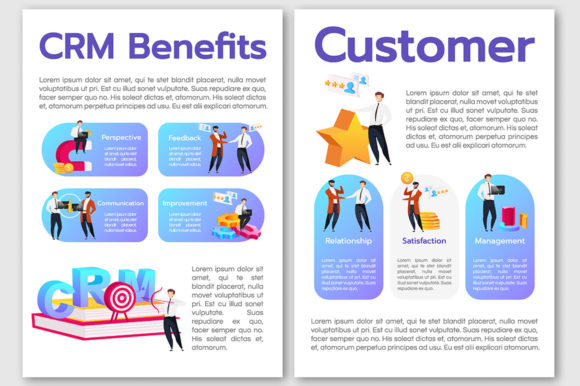
In the modern business landscape, the gap between complex data infrastructure and human understanding is often bridged by design. For professionals, marketers, and entrepreneurs, the challenge is no longer just about implementing a Customer Relationship Management system; it is about communicating the value, workflow, and strategic intent of that system to stakeholders, clients, and teams. This is where the CRM Strategy, Process Flat Vector aesthetic has emerged as a critical tool in the visual vocabulary of contemporary commerce. It represents more than just a stylistic choice; it is a functional response to the increasing need for clarity in an era of digital saturation.
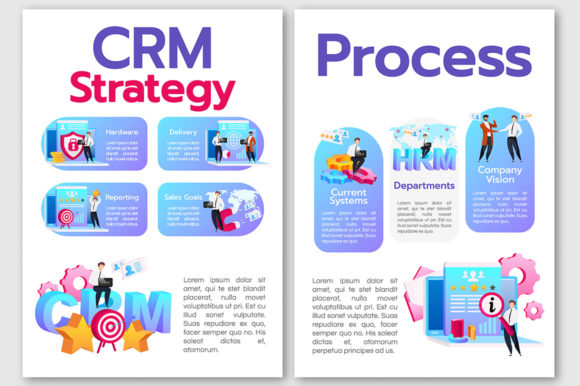
As organizations navigate shifting consumer expectations and internal technological transformations, the ability to distill intricate sales goals and operational workflows into digestible visual formats has become paramount. The rise of flat vector design in this niche is not merely a trend but a practical solution for creating flyers, booklets, printable leaflet designs, and digital assets that resonate with diverse audiences. By leveraging these resources, creators can align their visual output with the precision and efficiency that modern CRM platforms promise.
The Evolution of Business Visualization
To understand why the CRM strategy, process flat vector brochure template has gained such traction, one must look at the broader evolution of corporate communication. Historically, business process documentation was text-heavy, sterile, and often ignored. Today, stakeholders expect immediate visual comprehension. The flat design movement, characterized by minimalism, bold colors, and two-dimensional geometry, strips away unnecessary ornamentation to focus purely on information hierarchy.
This aesthetic aligns perfectly with the philosophy of modern CRM systems themselves. Just as a well-configured CRM removes friction from the customer journey, flat vector graphics remove cognitive friction from the viewer’s experience. When presenting sales goals or mapping out user journeys, the clean lines and scalable nature of vector art ensure that the message remains crisp whether it is viewed on a smartphone screen or printed as a large-format infographic poster with text space. This versatility is essential for freelancers and agencies who must deliver consistent branding across multiple touchpoints without compromising quality.
Bridging Technical Complexity and Human Connection
One of the most significant shifts in current market trends is the humanization of B2B technology. Decision-makers are no longer impressed solely by technical specifications; they want to see how technology integrates into lifestyle and workflow. This has led to a surge in demand for assets like cartoon annual reports and illustrated process maps. These elements soften the rigid perception of database management while maintaining professional credibility.
When utilizing a CRM Strategy, Process Flat Vector asset, designers are able to depict abstract concepts—such as lead nurturing, pipeline management, or automation triggers—as tangible, relatable scenes. This visual metaphor helps non-technical team members grasp the utility of current systems and fosters better adoption rates. For entrepreneurs pitching to investors, these visuals serve as proof of concept, demonstrating that the business model is not only viable but also clearly understood and organized.
Practical Applications Across Media Formats
The true power of these vector resources lies in their adaptability. A comprehensive design package does not exist in a vacuum; it serves as a foundational layer for various marketing and internal communication materials. Professionals are increasingly seeking unified visual languages that can transition seamlessly from digital to print environments.
- Flyer and Leaflet Design: For trade shows or direct mail campaigns, concise communication is key. Flat vectors allow for high-impact visuals that do not clutter the limited real estate of a printable leaflet design. The simplicity ensures that key selling points regarding CRM capabilities stand out against white space.
- Magazine Page Layouts: Editorial content requires a balance of imagery and typography. Vector illustrations provide modular elements that can be resized or recolored to fit specific column widths or bleed areas without pixelation, making them ideal for industry publications discussing tech trends.
- Annual Reports and Corporate Updates: Moving away from dry tables, forward-thinking companies use cartoon annual reports and infographic styles to narrate their yearly performance. This approach transforms compliance documents into engaging brand stories that highlight growth and strategic milestones.
- Digital Presentations and Web Assets: Scalable Vector Graphics (SVG) are lightweight and resolution-independent, ensuring fast load times and sharp rendering on all devices. This is crucial for maintaining SEO performance and user experience when explaining complex processes online.
Technical Versatility and Workflow Integration
For creators and freelancers, time is the most valuable currency. The relevance of pre-designed CRM strategy, process flat vector brochure template collections stems from their ability to accelerate production timelines without sacrificing customization. Understanding the technical composition of these assets is vital for maximizing their utility in professional workflows.
A robust resource kit typically arrives as a ZIP file contains EPS, JPG, PNG, SVG, AI formats. Each format serves a distinct purpose in the creative ecosystem. The AI and EPS files are the master sources, allowing designers to manipulate nodes, adjust color palettes to match brand guidelines, and recombine elements to create bespoke compositions. This editability is what separates professional templates from generic stock clip art. It allows for the precise alignment of visual elements with specific organizational narratives.
Conversely, PNG and JPG formats offer immediate usability for quick mockups, social media posts, or client approvals where vector editing software may not be available. The inclusion of SVG ensures future-proofing for web development projects. This multi-format accessibility supports a hybrid workflow where strategists, marketers, and designers can collaborate effectively, sharing assets across different platforms and skill levels.
Aligning Visuals with Strategic Objectives
The adoption of these design resources is ultimately driven by business outcomes. When a company invests in refining its visual communication regarding CRM, it is signaling a commitment to transparency and efficiency. In a marketplace where trust is a primary currency, clear visualization of processes reduces ambiguity for both employees and customers.
Consider the onboarding process for new sales staff. Traditional training manuals are often dense and intimidating. By integrating CRM Strategy, Process Flat Vector illustrations into training materials, organizations can create visual cheat sheets that reinforce learning and improve retention. Similarly, when explaining current systems upgrades to existing clients, visually appealing brochures can mitigate resistance to change by making the new interface appear intuitive and user-friendly.
Future-Proofing Business Communication
As we look toward the next phase of digital transformation, the intersection of data and design will only become more integrated. Artificial intelligence and machine learning are making CRM systems smarter, but the need to explain these advancements to humans remains constant. The flat vector style, with its inherent flexibility and timelessness, is well-positioned to evolve alongside these technologies.
We are seeing a shift towards more inclusive and diverse representation within these vector sets, reflecting a broader societal push for authenticity in marketing. Additionally, the modularity of flat design allows for easy adaptation to emerging formats, such as augmented reality overlays or interactive web experiences. By building a library of high-quality, editable vector assets now, businesses are insulating themselves against future design obsolescence.
Furthermore, the emphasis on "helpful content" in search algorithms and user experience metrics means that visual assets must do more than decorate; they must inform. An infographic poster with text space is not just a pretty picture; it is a structured argument presented visually. It guides the eye through a logical progression, reinforcing the textual message rather than competing with it. This synergy between form and function is the hallmark of effective modern business communication.
Empowering the Modern Creator Economy
Finally, it is worth noting how these resources support the burgeoning creator economy and freelance sector. Small agencies and independent consultants often lack the budget for custom illustration on every project. High-quality, themed vector packs democratize access to premium design standards. They enable solo practitioners to compete with larger firms by providing a polished, cohesive visual identity that instills confidence in prospective clients.
For these professionals, the CRM strategy, process flat vector brochure template is more than a design asset; it is a business enabler. It allows them to say "yes" to tight deadlines and complex topics, knowing they have a reliable foundation upon which to build. As the demand for specialized B2B content continues to grow, so too does the value of having a versatile, professionally crafted visual toolkit at one's disposal.
In conclusion, the integration of CRM Strategy, Process Flat Vector assets into business workflows represents a maturation of how we communicate value. It acknowledges that in a world of infinite data, clarity is the ultimate competitive advantage. Whether used for a detailed magazine page, a strategic booklet, or an internal process map, these vectors translate the abstract language of customer relationship management into a universal visual dialect. By embracing these tools, professionals ensure that their strategies are not just implemented, but truly seen, understood, and acted upon.